


|
© 2013 Heidi Haris.
Best viewed using Google Chrome with a resolution of 1366 x 667. |


|
Gadis Saintis
|
|||||
|
Friday, 23 May 2025 +
Conservationist (/kɒnsəˈveɪʃ(ə)nɪst/);
a person who advocates or acts for the protection and preservation of the environment and wildlife

Hello people.
I've been frequently called activist by my friends, who thought I am one of the people who love nature so much and my hobby is bringing banner with "Protect Our Nature!" written on it, making a protest in front of bulldozers that are getting ready to knock down trees (not in a bad way, I mean people who do this should receive our respects for their braveness but I am not...yet one of them and yes, I do love nature very much). I am actually a soon-to-be CONSERVATION BIOLOGIST and I don't protect nature and wildlife for fun, that's literally my job. That is because, I learned how to conserve and protect our biodiversity* with some scientifical ways, hence, the biologist or scientist. I don't learn evolutionary biology or all these killer science subjects just for you to call me an activist (in a bad way, macam perlian, macam nak mengejek sebab aku dah pernah kena sekali).
So, for the purpose of this blog, I will define conservationist as anyone who dedicates their time and efforts to conserving biodiversity, habitats, a species, traditional knowledge* or even a community of indigenous people. Yes, it really is that broad! Jangan fikir conservationist duk jaga binatang dengan pokok je okay annnnnnnd you don't have to be a scientist to be a conservationist. You can be an engineer, a manager, a singer or even a gamer yang rajin raise awareness through your Twitch streams—semua tu pun boleh jadi conservationist if you're dedicating your time and platform to protect and conserve in any way.
Here's the thing, the misconception starts when people assume conservationists are all tree-huggers who live in the jungle, don’t use plastic, makan daun and mandi sungai je. No no no, my friend. Some of us live in cities, drive cars, scroll TikTok, and binge Netflix while simultaneously worrying about habitat fragmentation and species extinction. We don’t have to abandon modern life to care about nature. Conservation is not a lifestyle trend; it’s a responsibility. And you know what’s more? Conservation is messy. It’s not just sunshine, baby turtles, and planting trees. Kadang-kadang it's arguing over policies, running statistics at 2am, and crying over data that doesn’t make sense (or crying over lack of data cries in underfunded research). Sometimes it's doing stakeholder meetings where you're the youngest person in the room, trying to explain why a patch of forest is more than just 'unused land'. Sometimes, it's just you and your laptop trying to connect dots between species presence and climate data while your kopi dah sejuk.  I remember during my fieldwork, orang kampung tanya, “Kerja kamu ni… kerja kerajaan ke?” and I had to explain for the 10th time that I'm a researcher doing biodiversity assessment, bukan pegawai perhutanan, bukan pegawai daerah, and definitely bukan influencer (although kalau ada sponsor nak bagi baju outdoor free, I won’t say no 👀). So yeah, next time you see someone talking passionately about saving a frog species you’ve never heard of, or advocating for indigenous land rights, or posting about mangrove restoration, jangan cepat label as “activist” like it’s some vague thing. That person might be a highly trained expert doing work that bridges science, policy, and community. Or maybe just a concerned citizen trying their best. Both valid. Both matter. The point is, being a conservationist is not one-size-fits-all. It's a beautiful chaos of disciplines, perspectives, and passions, and we need all kinds of people to make conservation actually work. To be continued... (kalau rajin update lah hahaha) *Biodiversity: variability among living organisms (kepelbagaian benda hidup) *Traditional knowledge: knowledge atau skill turun temurun dalam sesuatu community, kaum or culture Labels: Awareness, Biodiversity, Conservation Friday, 18 September 2020 +
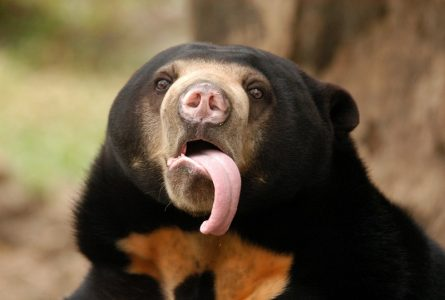 Hi people! I hope you guys are doing well, physically and mentally. I know the situation right now is kind of harsh, again, phew hope we'll get through this pandemic well. Last few months I was planning to do an Instagram live while answering questions from my friends regarding animals. Any kind of questions as long as it is related to animals but sadly, we didn't manage to do the live....because I need to stay back in the lab till night that day. So, since we're having a crazy writing week now, I thought I might also update and answer all the questions in this blog post and make it a monthly routine (hopefully). It will be rude to leave your questions unanswered, is it? Here we go:  Do fish sleep? Do fish sleep?Yes! Fish sleep with their eyes open because they do not have eyelids. Some reseachers say they are resting instead of sleeping because they are still alert to danger. They do not sleep in the same way that land animals sleep. How to know if they are sleeping? Most of them will remain motionless (except for certain shark species, they must keep moving even while "sleeping" to ventilate their gills), their breathing will slow down and they will lay on the bottom of the sea/aquarium-- nampak macam tengah termenung memikirkan masa depan gituuu Is there any lion, zebra, giraffe, cheetah in Malaysia?No, except in the zoo. Lion, zebra, giraffe and cheetah are not originally from Malaysia! Lion are widely distributed in most of Africa region and also some in India (Asiatic lion). Zebra can be found in southern Sudan, Ethiopia, Namibia and northern South Africa. While giraffe is native in Africa and cheetah can be found mostly in Africa region and Iran. Is there any bear that can be found in Malaysia?Yes, Malaysia ada beruang matahari or sun bear in english (picture above). Sun bear kita is the smallest bear species in the world, comelkan? Dia ada lidah yang sangat panjang that can be up to 25 cm because they are experts in extracting honey from bee nests. Yes, dia makan madu. Selain itu, they are arboreal which mean, they can climb up the tree, using their small size and long curved claws. Sadly, our sun bear sekarang is facing threats from habitat destruction and poaching (for medicinal purposes, I mean for god sake?! it is 2020, just go to the pharmacy if you are sick, don't eat bears bile!), hence making them the most vulnerable bear species :( So, that's it for now. Sorry if it is too short. I will try to squeeze my time to write more blogpost as I am busy with thesis writing process right now (doakan saya habis master tahun ni, thank you!). Drop more questions regarding animals on the comment section below and I will answer it in my next post, inshallah. Thank you for reading :) Labels: Animals, Awareness, Biodiversity Wednesday, 30 January 2019 +
Hello greedy people.
Today, I am going to talk about Romeo and his journey to find his Juliet. Romeo has been waiting for his soulmate for more than a decade and was once thought as the last known species of it's kind. Who is this Romeo? Romeo is actually a Sehuencas water frog (Telmatobius yuracare) who live in a small stream within Andean cloud forests in Bolivia, alone before he was being collected from the wild 10 years ago to be brought to Centro Kayra, a captive-breeding center in Cochabamba. This poor frog is native to that single stream, which means it can only be found there. Sehuencas water frogs are now critically endangered and the reduction of their numbers are majorly due to habitat loss, pollution and climate change (See Trump, we told you climate change is real). Afraid that Romeo, one of the last of his species goes extinct, Joel Sartore, the founder of PhotoArk took his portrait, joining the other 9,000 species that may face the same fate like Romeo. Ok fun fact, taking Romeo's photos are not that easy as Joel said he needs to go through the refrigerated trailer and he needs to change into sterilized jumpsuits and boots, just to see Romeo! Why? Because he is so valuable. One careless mistake may wipe out this entire water frog species from the earth.
So, after 10 years living alone in the aquarium of captive breeding center, turns out he isn't lonely any longer! The non-profit Global Wildlife Conservation teamed up with the dating website, Match.com to find his Juliet. Psssst, Romeo has it's own dating profile okay and also his own twitter account (so cute meh). Their efforts paid off as in January 2019, they discovered FIVE Sehuencas water frogs including Juliet, a juvenile female and three males. Now, Juliet is on her way to Romeo- but they are still not sure whether the pair will hit it off. For now, the five new members are being quarantined to monitor for any disease especially a deadly fungus that may threaten their life. They also don't want Romeo to get sick on his first date! So far, the conservationist claimed that:
"Romeo is very shy. He doesn't come out very often. He stays under his shelter, he's been kind of a reluctant star, a reluctant celebrity. Juliet, on the other hand, is "very, very active," swimming around her tank and making several daring escape attempts." Well, let's hope in this case that opposites attract. The fate of this entire species may rest on their little green shoulder but thankfully, they are not the last hope for their species as the conservationists will keep searching for more frogs.
Romeo species is an example of what other species are going through right now. In Malaysia, there are only two individuals of Sumatran Rhino left, Tam (middle-aged male) and Iman (a female that has a uterine cyst, so typical reproduction is impossible). Which means they are now considered as extinct in the wild. Sad isn't it? Ironically, it is entirely because of us, human. We are causing the sixth mass extinction on this earth, possibly the worst wide-scale extinction since the dinosaurs. Fikir-fikirkanlah dan selamat beramal (drop mic). That's all for now, till next time!
p/s: drop any questions or suggestions in the comment box below, don't let me be another Romeo pls Labels: Animals, Awareness, Biodiversity |

|
|